What To Do After A Car Accident
The first hour, in the order it actually happens — and the one decision most drivers make without realising it matters.
If it just happened
Get clear of traffic, call 911 if anyone is hurt, photograph everything, and decide where the car is towed before someone decides for you.
Need a tow now — (561) 900-8515Get clear of traffic
If the car moves and it is safe, pull onto the shoulder or into a lot. Hazards on. On I-95 or Glades Road, staying in a live lane is the real danger, not the damage.
Call 911 if anyone is hurt
Injury, a blocked roadway, or a driver who seems impaired means police, every time. Under Fla. Stat. § 316.065 a crash must be reported when there is injury, death, or apparent property damage of at least $500 — a threshold almost any modern bumper clears on its own.
Photograph more than you think you need
Both cars, all four corners, the plates, the road, the traffic signals, the other driver's insurance card. Wide shots for context and close-ups for damage. Photographs settle disputes that memory does not.
Exchange information — and nothing else
Name, phone, insurer, policy number, plate. Do not discuss fault at the scene. Adrenaline makes people apologise reflexively, and an apology gets repeated later as an admission.
Decide where the car goes before the tow truck decides for you
This is the step almost everyone skips, and the one that shapes the whole repair. The shop the car is delivered to is usually the shop that keeps it. You can name your own — we run our own recovery line and bring the car straight to our facility.
Report the claim, then choose your shop
Call your insurer and open the claim. When they suggest a facility, you can say you have already chosen one — here is what Florida law says about that.
General guidance for Florida drivers, not legal advice. Reporting thresholds and requirements can change — confirm with law enforcement and your own insurer, and speak to an attorney about a specific incident.
After The
Crash
What Boca Raton drivers ask in the hours after a collision.
Under Fla. Stat. § 316.065 a crash must be reported when there is injury, death, or apparent property damage of at least $500. Modern bumpers, sensors and headlamps pass $500 easily, so in practice most collisions meet the threshold. When in doubt, report it.
You do. A tow operator or an adjuster may suggest a facility, but the choice is the vehicle owner's. It matters because the shop the car is delivered to is usually the shop that ends up repairing it. Our collision and towing line is (561) 900-8515.
No. Exchange names, phone numbers, insurers, policy numbers and plates, and leave fault to the police report and the insurers. People apologise reflexively after a crash, and an apology at the scene gets repeated later as an admission.
Have it looked at. Structural damage, a cracked radiator support, a bent subframe or a knocked-out sensor calibration are frequently invisible from outside. A drivable car can still be unsafe, and hidden damage found later is harder to attach to the claim.
As soon as you are safe. Most policies require prompt notice, and an early claim means the estimate and any supplements start moving sooner. You can open the claim and still choose your own repair shop.
We'll Come
And Get It
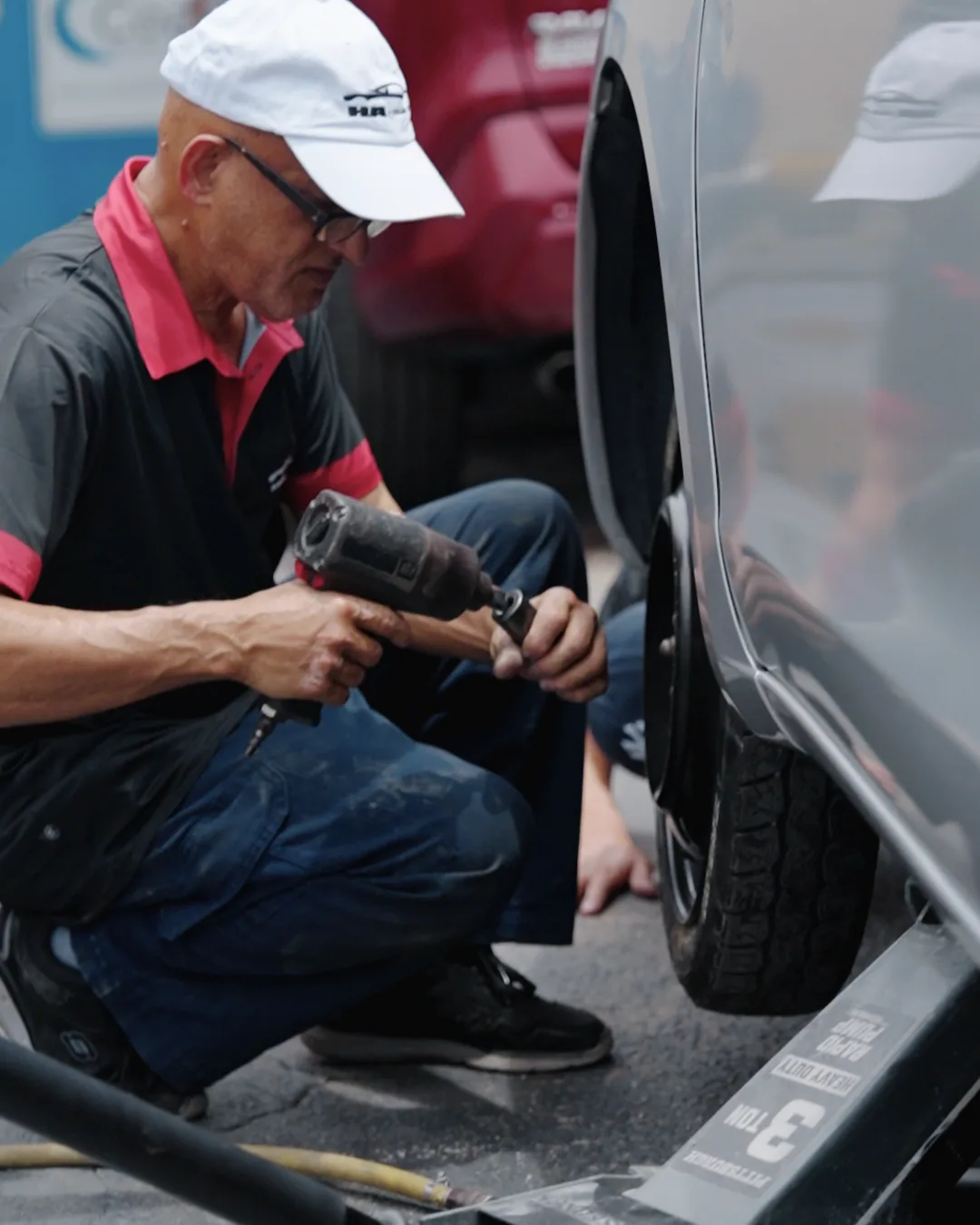
Collision recovery straight to our OEM-certified shop, then a repair to factory standard with a lifetime warranty. Free estimates.